
Project Risk Management: How to Identify, Assess and Control Risks
Learn project risk management with practical examples, a sample risk register and simple ways to identify, assess and control risks before they cause delays.
Read insightLearn why projects fail and how to prevent 10 common causes, including scope creep, poor planning, weak communication, resource gaps and unmanaged risks.

A software project starts with an agreed deadline. The team is confident, the client is happy with the proposal, and development gets underway.
Three months later, the deadline has passed. Several features are still unfinished, the budget has increased, and the client is frustrated.
What went wrong?
Sometimes a project fails because of a major technical problem or an unexpected event. More often, several smaller problems build up over time. Requirements were never fully agreed. Decisions took longer than expected. Changes were accepted without checking their impact, and warning signs were missed.
Understanding why projects fail can help businesses recognise these problems before they become expensive.
In this article, we'll look at ten common causes of project failure, with practical recommendations for preventing them. The examples apply to IT and software projects, engineering, construction, digital agencies and other businesses.
A project doesn't have to be cancelled to be considered unsuccessful.
It may be completed but delivered months late. It may cost far more than expected. Or it may meet its technical requirements while failing to deliver the business benefits it was meant to achieve.
Imagine a company investing in a new customer management system.
The system is delivered on time and within budget, but employees struggle to use it and continue working in spreadsheets.
From a delivery perspective, the project may appear successful. From a business perspective, it has not achieved its intended benefits.
This is why project performance should be measured against agreed objectives and business outcomes, alongside schedule, cost, scope and quality.
The Project Management Institute's (PMI) Pulse of the Profession 2024 report found an average project performance rate of 73.8% across its surveyed organisations. PMI measured this using the reported percentage of completed projects that met business goals. The figure is not an overall global project failure rate.
The research also highlights the importance of supporting teams and choosing project management approaches that fit the work.
One of the first problems appears when the project team and the client have different ideas about what needs to be delivered.
A client might request a new business website. The development team assumes it needs standard pages and a contact form. Halfway through the project, the client expects customer accounts, online payments and booking functionality.
Both sides thought the requirements were clear.
The result is additional work, disagreements and pressure on the original deadline.
Before starting, agree on the business objective, main deliverables and acceptance criteria.
For a software project, this may involve requirements workshops, user stories, prototypes or a formal requirements specification.
Ask the client to review and approve the agreed requirements. Also record important exclusions so that everyone understands what is outside the project scope.
Where requirements are likely to evolve, use an appropriate iterative approach with frequent reviews and clear priorities.
A business wants a project completed in eight weeks, so the project manager prepares an eight-week schedule.
But nobody checks whether the work can realistically be completed in that time.
Development alone may require six weeks. Testing needs another two weeks, and the team must still allow time for client approvals and corrections.
The deadline becomes a problem before the project has properly started.
Break the project into manageable activities and estimate how long each will take.
Identify dependencies, resource requirements and important milestones.
For larger or more complex projects, use techniques such as the Critical Path Method (CPM) to understand which activities influence the overall completion date.
Also, check employee availability. Someone assigned to several projects cannot always complete the work as quickly as a schedule suggests.
If the client's requested deadline is unrealistic, discuss the available options early. The business may need to reduce scope, add suitable resources or agree on a different delivery date.
A project team may be doing good work while the project still struggles because important information isn't reaching the right people.
For example, a developer needs clarification about a feature. The project manager sends an email to the client, but the person responsible for approval is away.
Several days pass without a decision.
Meanwhile, other activities continue based on assumptions that may later prove incorrect.
Identify key stakeholders and agree on how they will communicate.
Decide who approves deliverables, who receives progress updates and how urgent issues will be escalated.
Keep important decisions in a shared, accessible location.
For many smaller projects, a weekly progress meeting combined with task updates and an approval log can work well.
The Association for Project Management (APM) recommends involving stakeholders early and maintaining regular consultation so that requirements and expectations remain understood.
Communication should also work both ways. Project managers need accurate information from the team, and stakeholders need opportunities to raise concerns before they become major problems.
A software project begins with an agreed set of features.
During development, the client asks for an additional dashboard, a new integration and changes to the user interface.
The team accepts each request because it wants to keep the client satisfied.
Eventually, the project contains much more work than originally planned, but the deadline and budget remain unchanged.
This is a common example of scope creep.
Scope creep occurs when project scope expands without appropriate review and control.
Establish a clear scope baseline where appropriate and agree on how changes will be assessed.
When a new request arrives, check its impact on schedule, cost, resources, quality and risks.
Then obtain approval from the authorised decision-maker.
For a small project, a simple change log may be enough.
| Change request | Impact | Action |
|---|---|---|
| Add reporting dashboard | Additional development and testing | Assess and seek approval |
| Change website colours | Minor design work | Check against agreed revisions |
| Integrate another payment gateway | New technical dependencies | Review schedule, cost and risk |
Agile projects can handle evolving requirements through backlog refinement and prioritisation, but teams still need to manage commitments, capacity and commercial limits.

A project manager knows that a critical supplier may deliver late, but the risk isn't recorded or discussed.
When the delivery is eventually delayed, the team has no alternative plan.
The project stops while everyone tries to find a solution.
A similar problem can occur in IT projects when teams leave a complex integration or security requirement until late in development.
Identify important risks during planning and review them throughout delivery.
A risk register should record the risk, its likelihood and impact, the responsible owner and the planned response.
For example:
| Risk | Potential impact | Planned response |
|---|---|---|
| Supplier delivery delay | Construction activities delayed | Confirm lead times and identify alternatives |
| Software integration failure | Testing and launch affected | Test the integration early |
| Key employee unavailable | Critical work interrupted | Document work and arrange suitable cover |
Give each significant risk an owner and review the register during regular project meetings.
Risk management doesn't remove all uncertainty, but it improves the team's ability to prepare and respond.
For further reading, ISO 31000:2018 provides internationally recognised guidance on risk management.
Imagine a digital agency managing five active client projects.
Each project manager assigns work to the same graphic designer. Individually, the deadlines appear reasonable.
But when all the assignments are combined, the designer has more work than can be completed in the available time.
Tasks begin to slip, and project managers start competing for the same resource.
This can happen with employees, equipment, specialist contractors and materials.
Review resource availability across all active projects.
Estimate the effort required for major activities and identify any periods where demand exceeds capacity.
If necessary, adjust priorities, change the schedule, redistribute work or obtain additional resources.
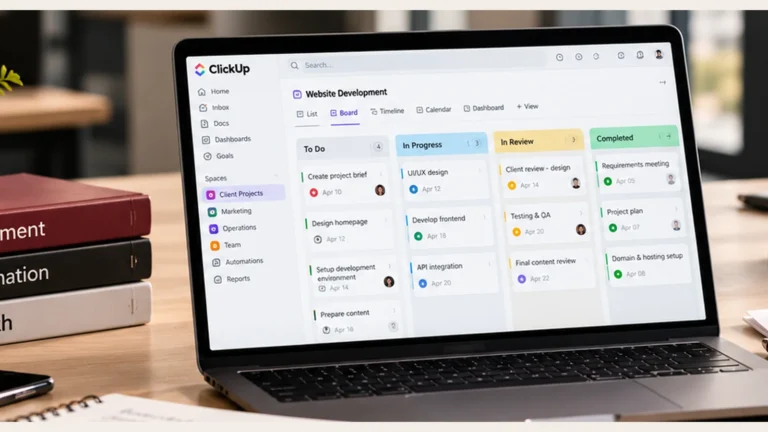
Project management tools such as ClickUp, Asana, Microsoft Project and Primavera P6 can support different levels of resource and workload planning.
However, the tool is only useful when task assignments and estimates reflect the actual work.

Some projects struggle because important decisions are delayed or nobody has clear authority to make them.
A project manager may identify a serious issue but lack authority to approve a solution. The sponsor may be unavailable, and different departments may disagree about priorities.
The team continues working while the problem remains unresolved.
Establish clear project governance.
Identify the project sponsor, project manager and people responsible for major decisions.
Agree on approval limits and escalation routes.
For example, the project manager might be allowed to approve minor adjustments within agreed tolerances, while major scope or budget changes require sponsor approval.
The APM's governance guidance explains how authority, accountability and escalation arrangements support effective project control.
Good governance is particularly important when several departments or external contractors are involved.
A software team completes development just before the planned launch date.
Testing begins late, and the team discovers major defects.
The launch must be postponed, or the business has to accept a product that is not ready.
Similar problems occur in engineering and construction projects when inspection, testing or quality requirements are overlooked during planning.
Define quality requirements and acceptance criteria early.
Plan reviews, inspections and testing as part of the schedule.
In software development, this may include code reviews, integration testing, security testing and User Acceptance Testing (UAT).
In engineering projects, it may involve technical inspections, quality assurance procedures and commissioning tests.
Make sure the team understands who will verify the work and who has authority to accept it.
Also, allow time for correcting defects discovered during testing.
A project may appear to be moving forward because everyone is busy.
But being busy doesn't necessarily mean the project is on schedule.
A team might complete several minor tasks while critical activities remain delayed.
If management only reviews progress near the deadline, there may be little time left to recover.
Establish a regular reporting process.
Compare actual progress against the approved schedule and important milestones.
Review budget performance, open issues, risks and pending decisions.
For complex projects, techniques such as Earned Value Management (EVM) can help assess cost and schedule performance.
For smaller projects, a simple dashboard showing milestones, overdue tasks, budget status and critical issues may be sufficient.
Pay particular attention to work that affects upcoming milestones and the project's critical path.
When delays appear, investigate the cause and agree on corrective action rather than simply changing the due date.
A business invests in a new CRM system.
The software is installed, employees receive their login details and the project is officially completed.
Three months later, most employees still use spreadsheets.
The technology works, but the organisation hasn't changed how it operates.
This is an example of why organisational change management matters.
It is different from project change control.
Change control deals with proposed changes to the project's approved scope, schedule and other baselines. Organisational change management helps people prepare for and adopt new ways of working.
Involve the people who will use the new system early.
Understand their concerns, provide suitable training and explain how the change will affect their work.
Give employees opportunities to test the system and provide feedback.
After implementation, monitor whether the intended business benefits are being achieved.
For example, if the new CRM was introduced to reduce manual reporting, check whether employees are actually using it and whether reporting time has improved.
A project can deliver a technically sound system and still fall short if the business isn't ready to adopt it.

Prevention is important, but sometimes the warning signs are already there.
Your project may be behind schedule, the budget may be under pressure, or the client may be unhappy with progress.
At that point, the project manager needs to understand the real situation.
Start by reviewing the current scope, schedule, budget, resources and outstanding issues.
Find out which activities are delayed, why they are delayed and how they affect the remaining work.
Then work with the team and relevant stakeholders to develop a realistic recovery plan.
This may involve:
Be careful about promising a recovery date before checking whether the revised schedule is achievable.
A realistic assessment and clear communication will usually be more useful than a new deadline based on optimism.
If you're managing an active project, these questions can help identify areas that need attention.
| Question | What to look for |
|---|---|
| Are the project objectives still clear? | Agreed deliverables and success criteria |
| Is the schedule realistic? | Updated estimates, dependencies and available resources |
| Are important decisions being made on time? | Clear ownership and escalation |
| Are scope changes controlled? | Recorded requests and appropriate approvals |
| Are risks reviewed regularly? | Updated risk register and assigned owners |
| Is quality being checked? | Agreed reviews, tests and acceptance criteria |
| Is progress reporting reliable? | Current information and clear forecasts |
| Will the business use the final result? | User involvement, training and adoption planning |
If several answers are unclear, it may be worth carrying out a more detailed project review before the problems become harder to resolve.
There isn't one cause that explains every project failure. Common contributing factors include unclear requirements, unrealistic planning, poor communication, weak governance and uncontrolled changes. Their importance depends on the industry, project complexity and organisational environment.
Yes. A project may meet its schedule and budget targets but fail to deliver the intended business benefits, meet user needs or achieve acceptable quality.
Start with clear objectives, realistic plans and assigned responsibilities. Review risks and progress regularly, manage changes properly and involve the people who will use the final result.
No methodology guarantees success. Agile can help teams respond to evolving requirements and obtain regular feedback, but projects still need suitable governance, resources, stakeholder involvement and effective management.
Identify the reasons for the delay, assess its effect on dependencies and milestones, review available recovery options and agree on corrective action with the appropriate stakeholders.
Projects rarely fail because of one problem alone.
A missed approval leads to a delay. The delay creates resource conflicts. Additional changes increase the workload, and the team struggles to recover.
Over time, these problems can affect the budget, quality and confidence of everyone involved.
The best opportunity to prevent failure often comes early, when the team is defining objectives, agreeing responsibilities and preparing the plan.
However, project management also requires regular attention throughout delivery.
Keep communication clear, review risks, monitor progress and deal with problems while there is still time to act.
Whether you're managing a software project, engineering work or a business improvement initiative, these practices can help you recognise warning signs and make better project decisions.
At KAFA Consultancy, we help businesses plan, manage and improve project delivery.
Our project management services include project planning and scheduling, risk management, change control, workflow improvement, project reporting and digital project management systems.
If your organisation is experiencing repeated delays, unclear responsibilities or difficulty managing multiple projects, we can help review the current processes and identify practical improvements.
Explore KAFA Consultancy's Project Management & Automation Services
Learn project risk management with practical examples, a sample risk register and simple ways to identify, assess and control risks before they cause delays.
Read insightLearn how to digitalise project management workflows, reduce manual work and improve project visibility with practical steps, tools and automation examples.
Read insightSet up project management for your small business with 10 practical steps covering project planning, responsibilities, scheduling, risks, software and workflow automation.
Read insight